

French Grocery Store Guide: Self-Catering Etiquette
France banned single-use plastic bags at checkout on July 1, 2016. Here's what that and other unwritten supermarket rules mean for self-catering travelers.
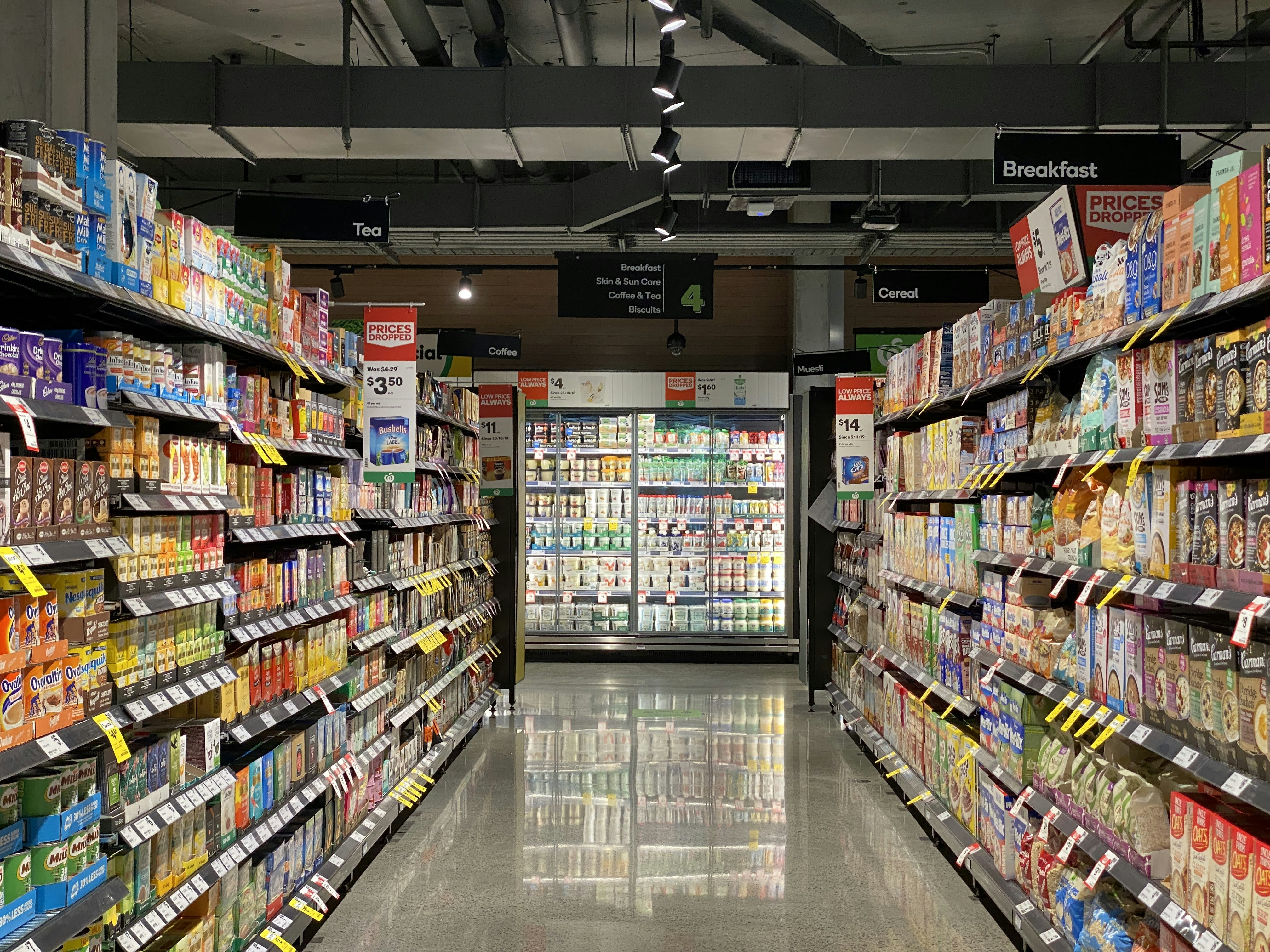
Photo by Nathan Cima on Unsplash

Written · Last updated
French supermarkets run on a set of small, unwritten rules that catch self-catering visitors off guard more than the food itself.
None of them are hard to learn, but skipping them turns a five-minute grocery run into a confusing one.
Key takeaways
France banned single-use plastic bags at checkout on July 1, 2016, so bring your own bag or buy a reusable one at the register. Loose produce usually needs to be weighed and stickered yourself before checkout. Milk and eggs are often shelved unrefrigerated, which isn't a storage mistake, it's standard French practice.
Do I need to bring my own bags to a French supermarket?
Yes, in practice. France banned single-use plastic bags at checkout starting July 1, 2016, under the country's Energy Transition and Green Growth law, and cashiers will ask "Vous avez un sac?" (do you have a bag?) rather than automatically bagging your groceries (France 24, Plastic Shopping Bags in France Are Now History, retrieved 2026-09-12). Reusable bags (sacs cabas) cost roughly €0.10-0.20 at most registers if you forget one.
Bringing a foldable bag from home saves more than the small purchase cost. It also skips the moment of fumbling for change at checkout while a line forms behind you, which is a bigger deal in France's smaller supermarket footprints than it sounds.
Why do I have to weigh my own fruit and vegetables?
Most French supermarkets require you to weigh and sticker loose produce yourself before reaching the checkout, using small scales positioned directly in the produce section. You select the item on a touchscreen, print the price sticker, and attach it to your bag; skipping this step means the cashier has to send you back to do it, which slows down the whole line.
The touchscreens are usually available in English as a language option, so the process is faster than it looks the first time. Look for a small flag icon in the corner of the screen.
| Habit | What to expect | Why |
|---|---|---|
| Bagging | Bring your own or buy one at checkout | Plastic bags banned since July 2016 |
| Loose produce | Weigh and sticker it yourself | Speeds up checkout lines |
| Milk | Often unrefrigerated (UHT) | Standard French processing, not spoiled |
| Eggs | Often unrefrigerated on shelves | Different washing/storage standards than the US |
| Checkout divider | Place it behind your items, not before | Signals where your order ends |
Why are milk and eggs sitting on a regular shelf, not refrigerated?
Because most French milk is UHT (ultra-pasteurized), which is shelf-stable until opened, and eggs are commonly sold unrefrigerated due to different washing standards than in countries like the US. Neither is a sign of spoiled or mishandled food; both practices are standard across French supermarkets, from small city Monoprix locations to large suburban Carrefour stores.
What should I know about checkout etiquette specifically?
Place a small divider stick (séparateur) behind your groceries on the belt, not in front of them, to mark where your order ends and the next customer's begins. Loading heavier items first makes bagging easier once you reach the end of the belt, since French checkouts move quickly and there's often limited counter space to sort items afterward.
For the broader etiquette around French food shopping, including markets rather than supermarkets, see how to shop a French market like a local. For cheese specifically, which gets its own aisle culture in most French supermarkets, see the French cheese guide. If self-catering is part of a plan built around dietary needs, see the vegetarian and vegan guide to France and food allergies in France for what to look for on packaging.
Frequently asked questions
No. France banned single-use plastic bags at checkout on July 1, 2016. Bring a reusable bag or expect to pay roughly €0.10-0.20 for one at the register.
Yes, at most French supermarkets. Use the small scales in the produce section to select the item, print a sticker, and attach it to your bag before checkout.
Yes. Most French milk is UHT (ultra-pasteurized), making it shelf-stable until opened. This is standard practice, not a sign of poor storage.
It marks the boundary between your groceries and the next customer's on the conveyor belt. Place it behind your own items, not in front of them.
The bottom line
French grocery shopping runs smoothly once you know a handful of small, unwritten rules.
- Bring your own bag; plastic bags have been banned at checkout since 2016
- Weigh and sticker loose produce yourself before checkout
- Unrefrigerated milk and eggs are normal, not a red flag
- For the full regional food map, see the French food guide
Before you go
Plan the rest of your trip
Choose where to stay, work out your train route, and check what travel insurance covers before you book.
Related Guides

French Food Guide: What to Eat in Every Region
French food splits sharply by region: Norman cider, Alsatian choucroute, Provençal bouillabaisse. A region-by-region map of what to eat and where.

How to Shop a French Market Like a Local
Paris alone has more than 90 markets, 65 of them open-air. Here's the etiquette that separates a smooth market visit from an awkward one.

French Cheese Guide: Regions, Types, and How to Buy It
France has 46 AOP-certified cheeses out of hundreds of named varieties. Comte alone accounts for nearly 36% of all AOP cheese production.