


French Bread and Pastry Guide: Boulangerie Culture
France's 1993 bread decree legally protects the word boulangerie. Here's what separates it from a patisserie, and why your baguette goes stale in a day.
Photo by Fin MacBrayne on Unsplash

Written · Last updated
The word "boulangerie" isn't just a sign over a shop door in France. It's a legally defined term.
A 1993 government decree drew a hard line between real bakeries and bread resellers, and that same law explains why an authentic French baguette turns stale within a day.
Key takeaways
France's 1993 bread decree (Décret Pain) legally restricts the term "boulangerie" to shops that knead, shape, and bake bread on-site, and defines "baguette de tradition française" as containing only flour, water, salt, and yeast, with no additives or freezing allowed. Boulangerie, pâtisserie, and viennoiserie are three separate categories, not interchangeable terms.
What legally makes a boulangerie a boulangerie?
A shop can only use the word "boulangerie" if it kneads, ferments, shapes, and bakes its bread on the premises where it's sold, under France's Décret Pain of September 13, 1993 (Légifrance, Décret n° 93-1074, retrieved 2026-09-12). A shop selling bread baked elsewhere and simply reheated is legally a "dépôt de pain," not a boulangerie, even if it looks the same from the street.
That legal distinction is why a real boulangerie's baguette goes stale within about 24 hours: the same 1993 decree defines "baguette de tradition française" as containing only wheat flour, water, salt, and yeast or leaven, with no additives, preservatives, or frozen dough allowed. The staleness is proof of authenticity, not a flaw.
What's the actual difference between boulangerie, pâtisserie, and viennoiserie?
Boulangerie is the making and selling of bread; pâtisserie is pastry and cakes; viennoiserie sits between the two, covering enriched or laminated dough goods like croissants, pain au chocolat, and brioche (Gastro Travelogue, Boulangerie vs Pâtisserie: What's the Difference?, retrieved 2026-09-12). Many shops sell all three categories under one roof, but the terms describe distinct production traditions, not synonyms.
| Category | What it covers | Examples |
|---|---|---|
| Boulangerie | Bread, baked on-site | Baguette, pain de campagne |
| Viennoiserie | Enriched, laminated dough | Croissant, pain au chocolat, brioche |
| Pâtisserie | Pastry and cakes | Tarts, éclairs, macarons |
Are croissant and pain au chocolat really that different?
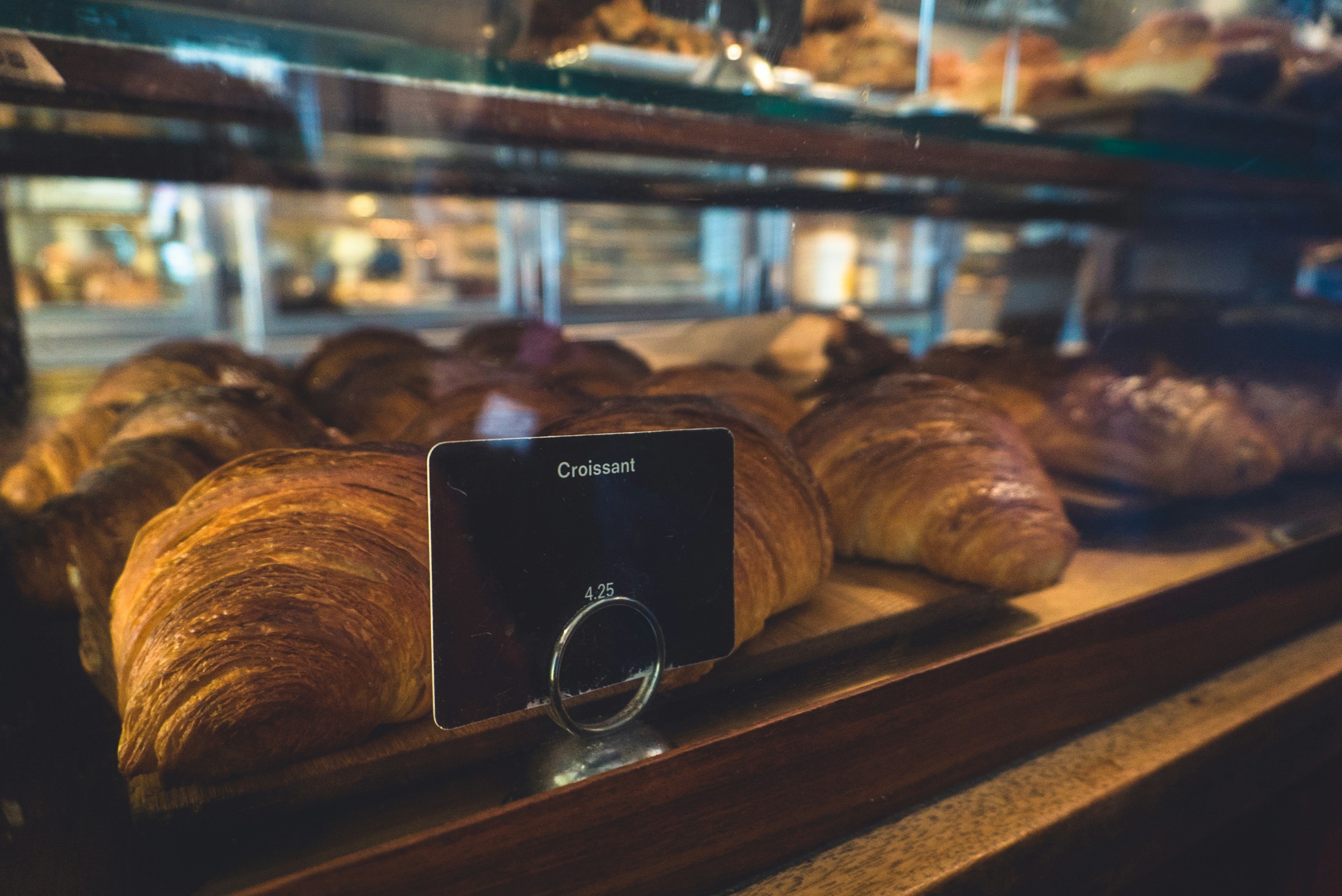
Both are viennoiserie made from the same laminated, buttery dough, but croissants are plain and crescent-shaped while pain au chocolat is rectangular with chocolate batons baked inside. The dough itself is nearly identical; the shape and filling are what separate them, not a different recipe.
Judging a boulangerie by its croissant works better than judging it by its baguette. A properly laminated croissant should shatter slightly at first bite and show clear, visible layers when torn in half; a flat or bready croissant is the clearest early sign of a mediocre bakery.
What should I actually order at a French boulangerie?
Order by pointing or naming the item clearly, and expect to pay in cash or card depending on the shop; many boulangeries are cash-preferred for small purchases (Migaku, French Boulangerie Etiquette, retrieved 2026-09-12). A simple "une baguette, s'il vous plaît" covers the most common purchase; for anything more specific, naming the item (a croissant, a pain au chocolat, a specific tart) works fine without extended small talk.
For the wider phrase set this fits into, see restaurant French for ordering food. For where bread and pastry fit into French market shopping more broadly, see how to shop a French market like a local.
Frequently asked questions
Because authentic "baguette de tradition française," as defined by the 1993 bread decree, contains only flour, water, salt, and yeast, with no preservatives or additives. That purity is exactly why it doesn't keep past a day.
Yes. Only shops that knead, shape, and bake bread on-site can legally call themselves a "boulangerie" under France's 1993 bread decree. Shops reselling bread baked elsewhere are legally "dépôts de pain."
Both use the same laminated, buttery dough. Croissants are plain and crescent-shaped; pain au chocolat is rectangular with chocolate batons baked inside.
Not exactly. Boulangeries focus on bread, patisseries on pastries and cakes, and viennoiserie (croissants, brioche) sits between the two. Many shops sell all three, but the categories are legally and culturally distinct.
The bottom line
French bread and pastry culture runs on categories and legal definitions most visitors never notice.
- "Boulangerie" is a legally protected term tied to on-site baking
- Real baguettes go stale fast because additives and freezing aren't allowed
- Croissant and pain au chocolat share dough, not shape
- For the full regional food map, see the French food guide
Before you go
Plan the rest of your trip
Choose where to stay, work out your train route, and check what travel insurance covers before you book.
Related Guides

French Food Guide: What to Eat in Every Region
French food splits sharply by region: Norman cider, Alsatian choucroute, Provençal bouillabaisse. A region-by-region map of what to eat and where.

How to Shop a French Market Like a Local
Paris alone has more than 90 markets, 65 of them open-air. Here's the etiquette that separates a smooth market visit from an awkward one.

French Cheese Guide: Regions, Types, and How to Buy It
France has 46 AOP-certified cheeses out of hundreds of named varieties. Comte alone accounts for nearly 36% of all AOP cheese production.