


Basque Country Food Guide: Pintxos and Espelette Pepper
The French Basque Country runs on pintxos, Espelette pepper, and gâteau basque. Espelette pepper has held AOC status since 2000 for a reason.

Written · Last updated
One pepper built an entire region's food identity, and it has the paperwork to prove it.
The French Basque Country, straddling the Spanish border in the southwest, blends pintxos culture with its own baking and stewing traditions, anchored by a single AOC-protected ingredient: Espelette pepper.
Key takeaways
Piment d'Espelette earned AOC status on May 29, 2000, and AOP status on August 21, 2002, making it one of France's most tightly regulated spices. Pintxos are the Basque Country's answer to tapas, but with real differences in serving style. Gâteau basque dates to the 18th century and originated in the French Basque region specifically.
Why does Espelette pepper have its own legal protection?
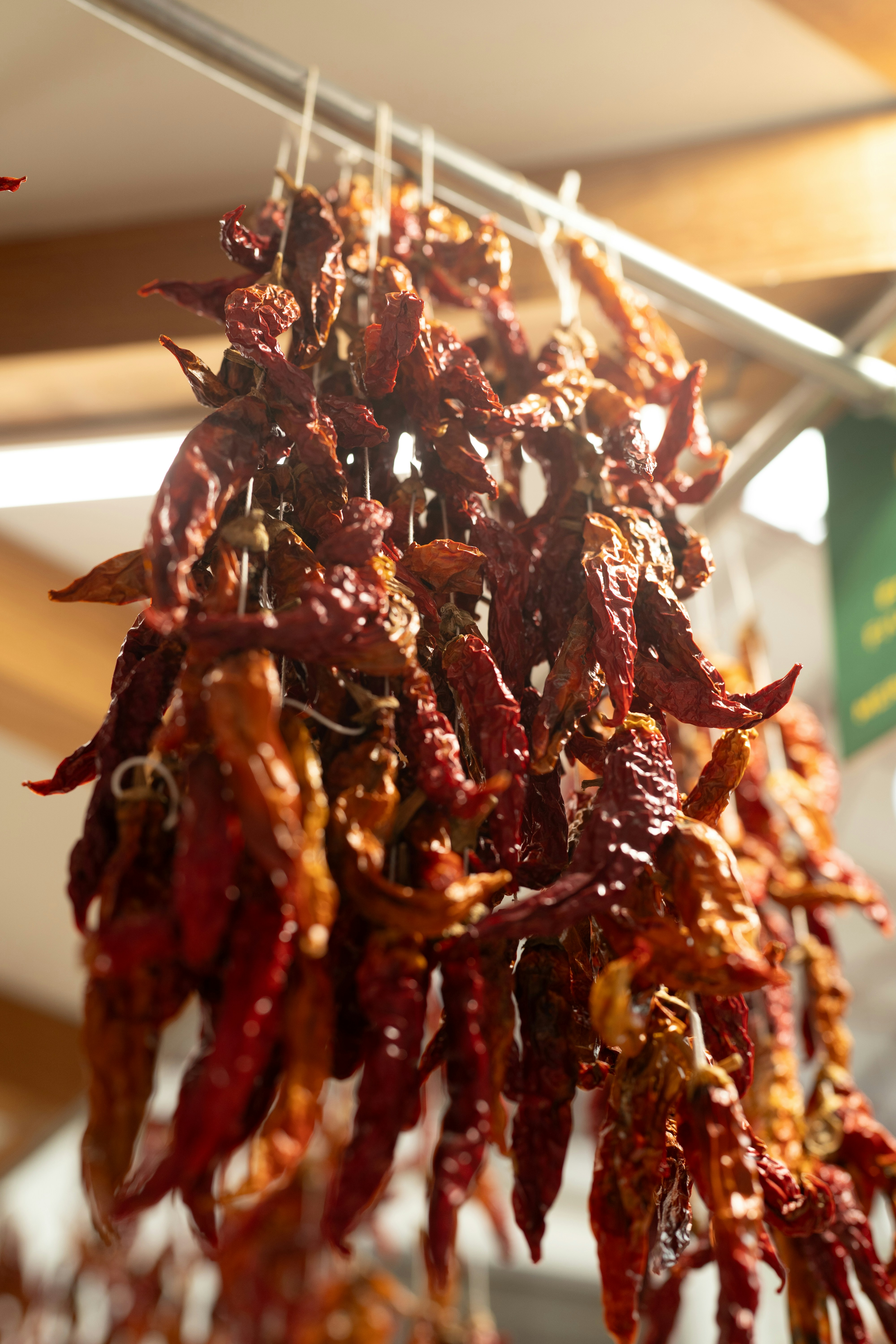
Piment d'Espelette received AOC (Appellation d'Origine Contrôlée) status on May 29, 2000, followed by full EU AOP protection on August 21, 2002, restricting the name to peppers grown in a defined zone around the town of Espelette (French Ministry of Agriculture, À la découverte du piment d'Espelette AOP, retrieved 2026-09-12). The pepper has largely replaced black pepper in Basque cooking, showing up in piperade, axoa (a veal and pepper stew), and countless charcuterie pairings.
Espelette pepper's mild, smoky heat is closer to a well-made paprika than a hot chili, which surprises visitors expecting something closer to cayenne. It's a flavor ingredient first, a heat source second.
Are pintxos the same as Spanish tapas?
Pintxos are small bites, often skewered on a toothpick, served in bars where locals move from one spot to the next rather than settling in for a full sit-down meal (Spanish Sabores, The Ultimate Guide to Basque Food, retrieved 2026-09-12). The difference from tapas is mostly about counting and payment: pintxos are typically self-served from a bar counter and tallied by toothpick count at the end, rather than ordered individually from a menu.
That bar-hopping structure makes Basque pintxos culture a genuinely social evening out, not a single restaurant reservation. Bayonne and Biarritz both have strong pintxos bar scenes, though the tradition is more deeply rooted on the Spanish side of the border.
French Basque Country food towns: Biarritz and Bayonne
- Biarritz
- Bayonne
What is gâteau basque, and where did it come from?
Gâteau basque is a custard- or cherry-filled cake that dates to the 18th century and originated specifically in the French Basque region, traditionally baked for village festivals (Spanish Sabores, The Ultimate Guide to Basque Food, retrieved 2026-09-12). It's dense and pastry-like rather than fluffy, closer to a filled tart than a Western sponge cake.
Coastal towns add their own seafood specialties on top of this baking tradition: chipirons (small squid) grilled with garlic in Saint-Jean-de-Luz and Ciboure, and ttoro, a fish soup built from hake, langoustines, mussels, and Espelette pepper.
Espelette itself holds a pepper festival every October, when strings of drying peppers cover building facades across the village. Visiting outside that week still gets you the same peppers in every shop, just without the festival crowds.
How does the French Basque Country compare to Provence and Corsica?
The Basque Country shares Provence's Mediterranean-adjacent late-dinner culture but leans on Spanish-influenced small plates rather than market-driven dishes like bouillabaisse. It's closer in spirit to Corsica's food guide, another region shaped as much by a neighboring country as by mainland France. For the coast-to-inland comparison within Provence itself, see the Provence food guide.
| Item | Status/origin | Best known for |
|---|---|---|
| Piment d'Espelette | AOC (2000), AOP (2002) | Piperade, axoa, charcuterie |
| Gâteau basque | 18th century, French Basque origin | Custard or cherry filling |
| Pintxos | Basque bar culture | Toothpick-tallied small plates |
| Ttoro | Coastal fish soup | Hake, langoustines, Espelette pepper |
Frequently asked questions
It has held AOC status since 2000 and AOP status since 2002, restricting the name to peppers grown in a defined zone. Its flavor is mild and smoky rather than sharply hot, closer to paprika than cayenne.
Not quite. Pintxos are typically self-served from a bar counter and tallied by toothpick count, while tapas are usually ordered individually. Both involve small plates and bar-hopping, but the serving mechanics differ.
Each October, when the village's building facades are covered in strings of drying peppers. Peppers are available in shops year-round regardless.
France specifically. It dates to the 18th century and originated in the French Basque region, distinguishing it from other Basque dishes shared across the Spanish border.
The bottom line
The French Basque Country's food identity is legally protected in a way few other regional cuisines are.
- Espelette pepper has carried AOC/AOP status since 2000-2002
- Pintxos differ from tapas mainly in how they're served and tallied
- Gâteau basque is a French Basque original, not shared with Spain
- For the full regional map, see the French food guide
Before you go
Plan the rest of your trip
Choose where to stay, work out your train route, and check what travel insurance covers before you book.
Related Guides

French Food Guide: What to Eat in Every Region
French food splits sharply by region: Norman cider, Alsatian choucroute, Provençal bouillabaisse. A region-by-region map of what to eat and where.

Best Basque Country Villages: Espelette, Ainhoa, and Sare
Espelette's pepper facades, Ainhoa's single perfect street, Sare's mountain railway. Which inland Basque villages deserve your time, and how to link them in one day.

Biarritz Travel Guide: Beaches, Surf & Where to Stay
Belle Époque resort meets Europe's surf capital. Which beach to pick, when to visit, and whether Biarritz or Saint-Jean-de-Luz suits your trip better.