


Alsace Food Guide: Choucroute, Tarte Flambee, and the Wine Route
Alsace runs on choucroute garnie, tarte flambée, and a 170km wine route. Here's how the region's German-French border history shapes every plate.
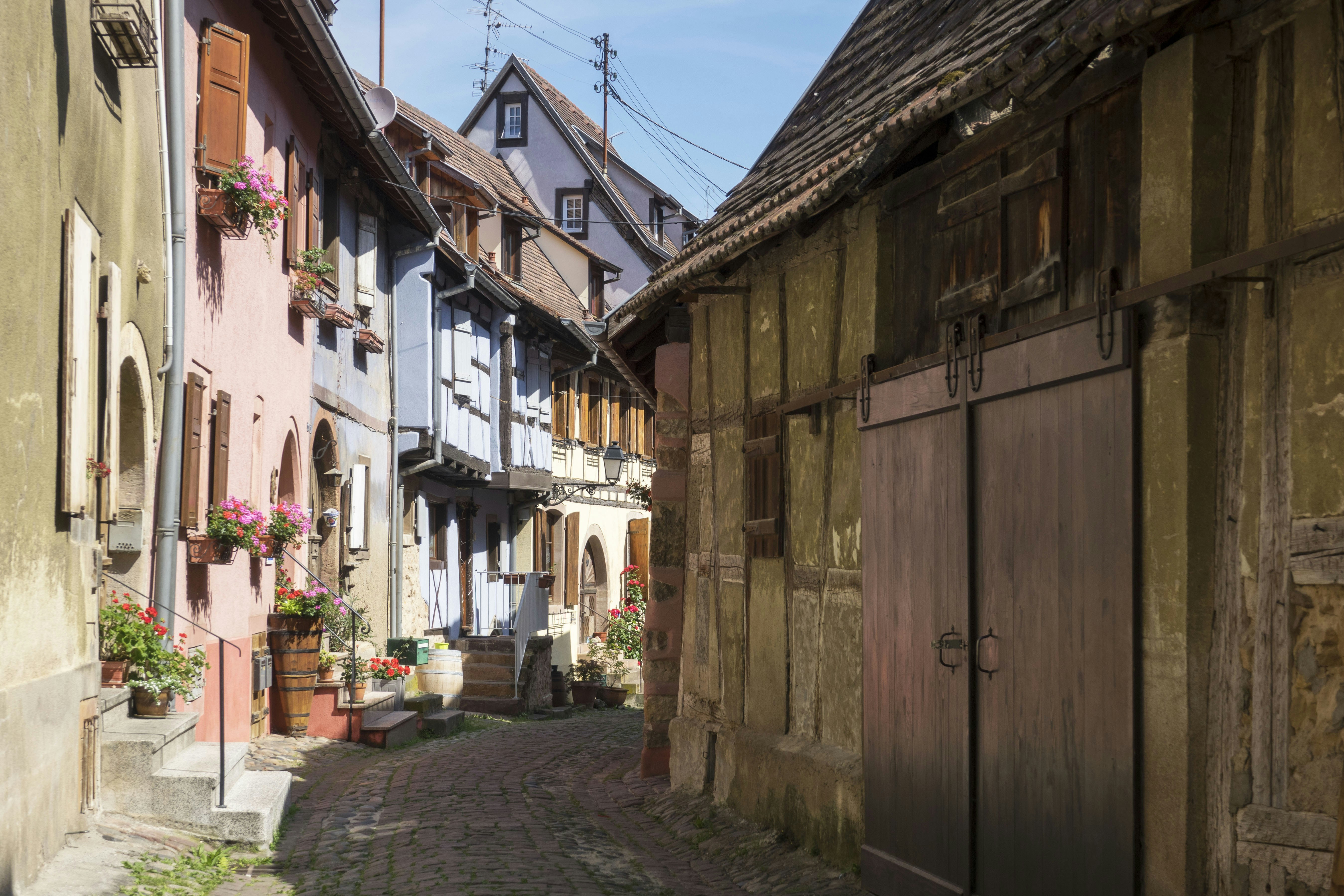
Photo by Filiz Elaerts on Unsplash

Written · Last updated
Alsace is the one French region where beer sits comfortably next to wine on the table, and that's not an accident.
Centuries of shifting between French and German control left Alsace with a food identity that borrows from both sides: hearty, pork-and-cabbage cooking closer to Germany, plated with the wine culture of France.
Key takeaways
Choucroute garnie, tarte flambée, and baeckeoffe are Alsace's three defining dishes, all shaped by German-French border history. The Alsace Wine Route (Route des Vins d'Alsace) is France's oldest wine route, established in 1953, running 170km from Marlenheim to Thann. Riesling pairs with choucroute; Gewurztraminer pairs with Munster cheese.
What is choucroute garnie, and why does it define Alsace?
Choucroute garnie is lacto-fermented cabbage braised in Riesling and goose fat, served loaded with smoked Strasbourg sausage, bacon, pork knuckle, and potatoes (DoEatBetter, Tarte Flambée and Choucroute: Strasbourg Guide, retrieved 2026-09-12). The dish should taste bracing and tangy, not just heavy, since the fermented cabbage is meant to cut through the fat of the meat.
Choucroute is the clearest evidence of Alsace's German heritage on a French menu: the same base dish (Sauerkraut mit Fleisch) exists across the border, just under a different name and with Riesling swapped for local German wine.
What is tarte flambée, and how is it different from pizza?
Tarte flambée (Flammekueche) is a thin, wood-fired flatbread topped with fromage blanc or crème fraîche, caramelized onions, and crispy lardons, and it predates pizza's popularity in France by generations (DoEatBetter, What to Eat in Strasbourg, retrieved 2026-09-12). Unlike pizza, it uses no tomato sauce and no mozzarella, and the dough is rolled paper-thin rather than pillowy.
Baeckeoffe, a slow-baked casserole of marinated meat, potatoes, and wine sealed under a bread-dough lid, rounds out the region's third defining dish. All three (choucroute, tarte flambée, and baeckeoffe) show up on nearly every Winstub menu.
What is the Alsace Wine Route, and is it worth doing by car?
The Route des Vins d'Alsace runs 170km along the eastern foothills of the Vosges mountains from Marlenheim, just outside Strasbourg, to Thann in the south, and it's the oldest established wine route in France, dating to 1953 (France This Way, Alsace Wine Route, retrieved 2026-09-12). It connects wine villages like Riquewihr, Kaysersberg, and Eguisheim, most of which are easiest to reach by car rather than train.
A car matters here more than in most wine regions covered in the wine tasting tours guide, since the villages sit off the main rail line between Strasbourg and Colmar.
Alsace's food and wine route: Strasbourg to Colmar
- Strasbourg
- Colmar
Which wine actually pairs with which Alsatian dish?
Dry, mineral Riesling is the standard pairing for choucroute garnie, while aromatic, slightly spicy Gewurztraminer is the traditional match for Munster cheese, one of France's most pungent washed-rind cheeses (Cellartours, Alsace Gastronomy Guide, retrieved 2026-09-12). Alsace is also one of the few French wine regions where beer, brewed locally around Strasbourg, is a normal dinner-table option rather than an outlier.
Booking a Winstub (a small, traditional Alsatian tavern) ahead of time matters more here than in most regions. The good ones seat maybe 20 people and fill up entirely on weekend evenings, especially during the Christmas market season.
| Dish | Base | Wine pairing | Where to try it |
|---|---|---|---|
| Choucroute garnie | Fermented cabbage, pork | Riesling | Any Winstub, Strasbourg or Colmar |
| Tarte flambée | Wood-fired flatbread | Pinot Blanc | Wine Route villages |
| Baeckeoffe | Slow-baked meat and potatoes | Sylvaner | Traditional Winstubs |
| Munster cheese | Washed-rind cow's milk | Gewurztraminer | Wine Route villages, Munster valley |
How does Alsace's food culture compare to the rest of France?
Alsace stands apart from every other region in this guide by treating beer as a legitimate wine-list alternative and by leaning on cabbage and pork rather than butter, olive oil, or seafood. It shares little with Normandy's cider and Camembert country or Brittany's crepes, cidre, and fresh oysters beyond a shared northern climate. For the wider regional map, see the French food guide.
Frequently asked questions
Choucroute garnie, fermented cabbage braised in Riesling and served with smoked sausage and pork, is the dish most associated with Alsace, followed closely by tarte flambée.
Effectively yes. The 170km route runs through villages like Riquewihr and Eguisheim that sit off the main Strasbourg-Colmar rail line, making a car or a booked tour the practical option.
No. Tarte flambée uses fromage blanc or crème fraîche instead of tomato sauce, no mozzarella, and a much thinner, cracker-like dough baked in a wood-fired oven.
A dry, mineral Riesling is the traditional pairing, chosen to cut through the richness of the fermented cabbage and smoked meats.
The bottom line
Alsace's food makes the most sense once you see it as a genuine border cuisine, not a regional variation on "French food."
- Choucroute garnie, tarte flambée, and baeckeoffe are the three dishes to prioritize
- The Wine Route needs a car and rewards booking Winstub tables ahead
- Riesling pairs with choucroute; Gewurztraminer pairs with Munster
- For the full regional map, see the French food guide
Before you go
Plan the rest of your trip
Choose where to stay, work out your train route, and check what travel insurance covers before you book.
Related Guides

French Food Guide: What to Eat in Every Region
French food splits sharply by region: Norman cider, Alsatian choucroute, Provençal bouillabaisse. A region-by-region map of what to eat and where.

How Many Nights in Strasbourg? A Quick Answer
How many nights to spend in Strasbourg: our recommendation by trip length (1 to 3 nights), plus exactly what to prioritize if you only have one night there.

Wine Tasting Tours in France: Guided vs Self-Drive, and Which Region to Pick
A wine tasting with a cellar visit in France averages EUR88, ranging EUR12-165. Here's how to pick a region, choose guided vs self-drive, and book it right.